
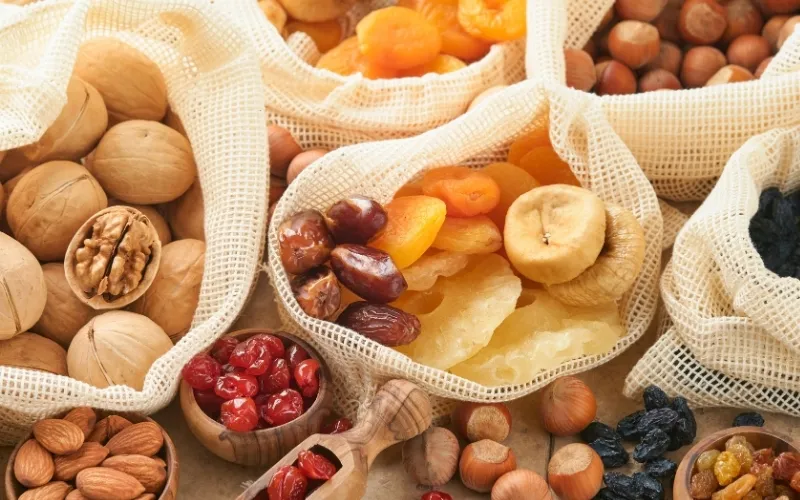
A large share of the dried fruit and seeds consumed in Mexico (almonds, walnuts, pistachios, cranberries, seeds) comes from abroad. Importing directly can improve your cost and ensure supply, but only if you understand the permits, the real costs, and the timelines. This guide summarizes what you need to know before bringing in your first container.
Why import dried fruit and seeds?
Products like almonds and pistachios come largely from the United States; raisins and prunes from Chile; other fruits and seeds from various origins. Importing directly allows you to buy at better volume prices, control quality from the source, and stop depending on intermediaries. In return, you take on the responsibility of regulatory compliance and logistics.
Permits and requirements
Importing agricultural products into Mexico is regulated. The key points to consider:
- Phytosanitary certificate: issued at the origin country and validated by the Mexican authority (SENASICA). This document certifies that the product is free of pests.
- Importer registration: enrollment in the importers registry and the relevant registrations for your line of business.
- Labeling and standards: compliance with Mexican Official Standards (NOM) for labeling and food safety for consumer products.
- Customs broker: in practice, you need one to process the customs declaration and coordinate clearance.
Important: requirements and tariffs change depending on the product, the country of origin, and the date. Before committing to an order, confirm current requirements with your customs broker and the relevant authority.
Costs: beyond the FOB price
The product price at origin is only one part of the equation. To calculate your real cost, consider:
- Import tariffs and taxes applicable according to the tariff classification and origin.
- International freight and cargo insurance.
- Handling, storage, and customs clearance fees at the port of entry.
- Customs broker fees.
- Domestic freight to your warehouse and handling losses.
The sum of all these items is your landed cost at warehouse, which is the number you should compare against buying domestic product.
Timelines and logistics
A container shipped by sea can take several weeks between closing the purchase, transit time, and customs clearance. Plan your inventory well in advance and keep in mind that dried fruit and seeds require dry, cool, and ventilated storage to preserve quality and prevent rancidity or pest issues.
Import or buy domestic?
Importing makes sense when you handle enough volume to dilute the fixed costs (customs clearance, freight, broker) and when the per-kilogram savings exceed those costs. For smaller volumes or when you need to restock quickly, buying from an established importer is usually more efficient: you get product already cleared through customs, without taking on the regulatory risk or the lead times.
Explore our dried fruit and seeds
We carry imported product already cleared through customs, ready for your business. Browse before requesting a quote.
View dried fruit & seeds