
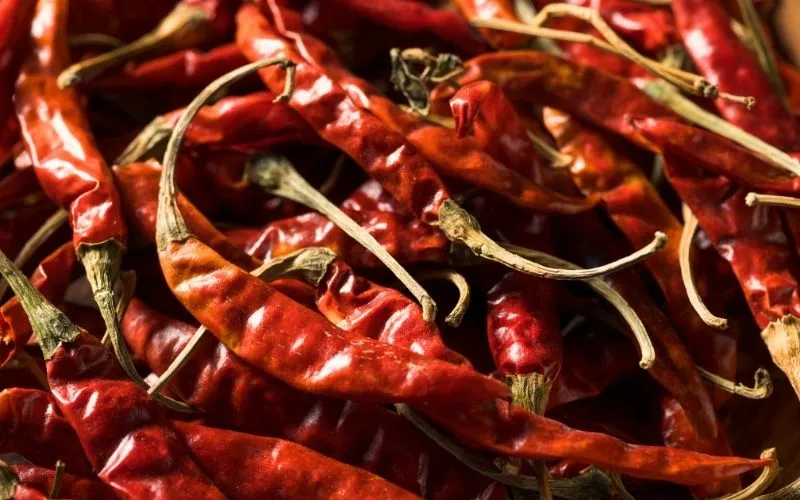
"Arbol chile" is the name used for both the product harvested in Mexico and the one that arrives from other countries, but the origin changes the price per kilo, the heat level, and the yield you get when processing it. For a wholesale buyer, knowing how to distinguish between the two prevents overpaying or receiving a product that does not fit your process.
What is arbol chile?
It is one of the most versatile dried chiles on the Mexican market: a thin, elongated pod with an intense red color and notable heat. It is widely used in salsas, hot oils, seasonings, and as a raw material for the food industry, which keeps it in high demand in both the domestic market and for export.
Domestic arbol chile
Domestic arbol chile is grown primarily in Zacatecas, Jalisco, and Durango. It generally has a more intense aroma, a slightly larger pod, and a traditional cultivation process that many buyers associate with better flavor consistency.
It is typically sold in 25 kg sacks and is available in different commercial grades: 1st, 2nd, and 3rd, based on color, cleanliness, and the proportion of whole pods.
Imported arbol chile
Imported arbol chile comes mainly from China and India. Its cost per kilo is usually lower, the color tends to be lighter, and the heat profile can differ from the domestic version, generally being somewhat milder and drier.
It is typically handled in 10 kg sacks and represents an option to consider when the end use is industrial and cost per kilo is the deciding factor.
Quick comparison
| Feature | Domestic | Imported |
|---|---|---|
| Origin | Mexico (Zacatecas, Jalisco, Durango) | Asia (China, India) |
| Packaging | 25 kg sack | 10 kg sack |
| Heat profile | Intense, aromatic | Moderate, drier |
| Available grades | 1st, 2nd, 3rd | Standard |
| Best for | Artisanal salsas, private label | Industrial grinding, cost reduction |
Which is best for your business?
The answer depends on the end use. If you sell the chile whole or use it as the base for an artisanal or private-label product, the domestic version usually offers a more consistent aroma and flavor profile that matches consumer expectations. If your process involves grinding for industrial salsas and cost per kilo is the priority, the imported option can be a viable alternative.
In any case, quality varies from batch to batch, regardless of origin. It is always advisable to request a sample before committing to volume, to verify color, moisture, and heat against what your process requires.
Important: Prices fluctuate based on harvest, season, and exchange rates. Request an updated quote before committing to volume.
Get a quote for wholesale arbol chile
Check prices and availability for domestic and imported arbol chile.
View dried chiles